- Home
- People + Places
- 1909 Chile Revival

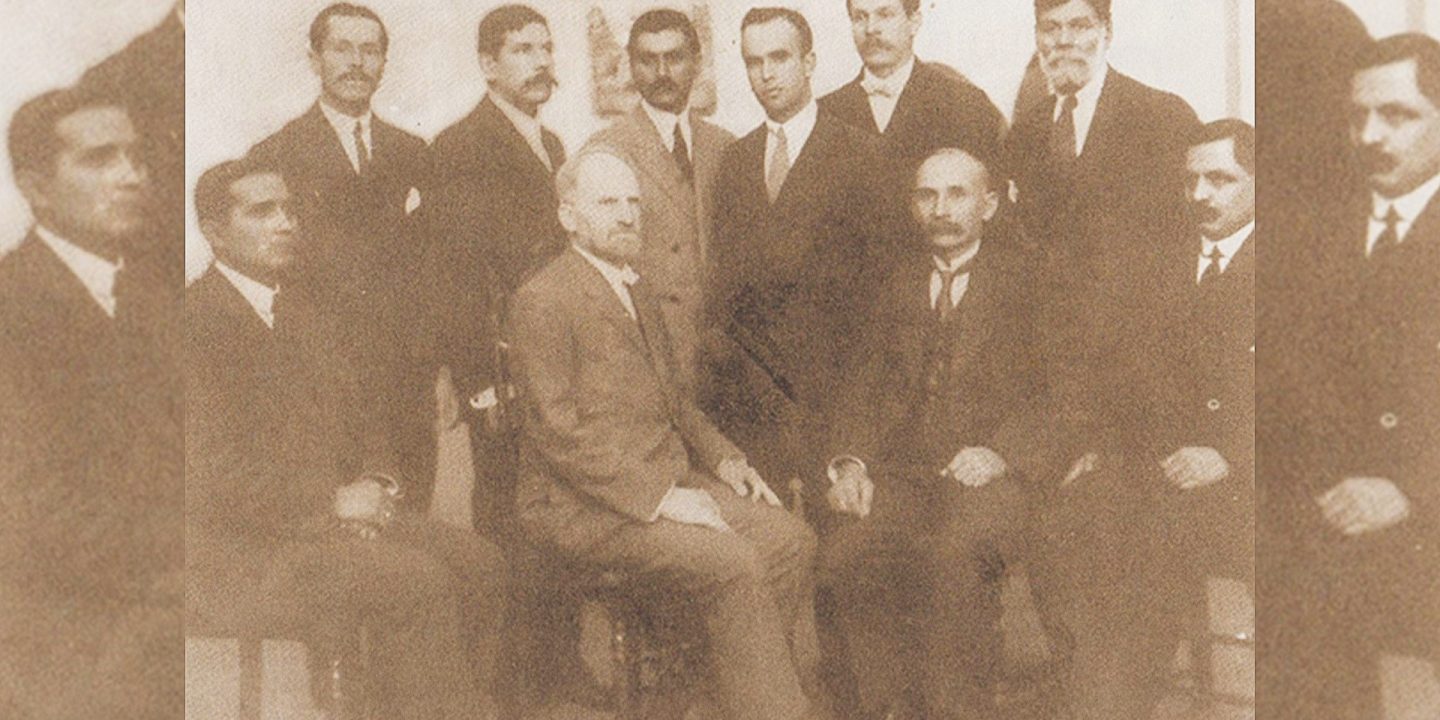
1909 Chile Revival:This particular outpouring of the Holy Spirit is traced to the missionary work of Willis C. Hoover (1858-1936), a physician in Chicago, United States of America. In 1889, he was sent to Chile as a missionary by the Methodist Episcopal Church. He started his work as an English teacher in the city of Iquique. In February 1902, Hoover was asked to take over a church in Valparaiso. During the same year, a revival broke out among the Methodist Episcopal churches in the area.
About a hundred people were added to the church he was pastoring, and the entire denomination in the region increased in attendance by 44%. This growth was sustained and increased through visitation in the homes of church members by their leaders, reports being given to the pastors in regard to the visits, prayer and evangelism.
The same year at Hoover’s church, its Sunday School lessons focused on the Acts of the Apostles. During this study, a person asked Hoover the question, “What prevents our being a church like the early church?” To that question, the pastor replied, “Nothing prevents it, except something within ourselves. This study of the book of Acts added fuel to the passion for spreading revival that the congregation was experiencing.
In 1903, with the revival still ongoing, a notable Argentine evangelist, Pablo Bettex, visited the area and conducted services at Hoover’s church, as well as other churches in South America. Due to the congregation’s observation of that man’s commitment to prayer and evangelism, the revival they were experiencing received a fresh wind that carried them along throughout that year.
In 1904, Hoover and his family returned to America for furlough, and the congregation was left in the hands of an associate. In 1905, a smallpox epidemic ravaged the city, affecting members of the church as well. For two years, things were at a standstill in the church. This calamity was followed by an earthquake in 1906, which devastated the city of Valparaiso, destroying the building Hoover’s congregation used for worship.
The positive effect of the earthquake was that church members were forced to meet in locations spread across the city providing many opportunities for many of them to develop their ministry gifts. However, in February 1907, church members received a tent from the Methodist Mission Society, and they began worshipping in one location again. A year later, the congregation reverted to meeting in homes and at other sites throughout the city.
In 1907, Minnie Abrams, a missionary working at Pandita Ramabai’s Mukti School in India, sent a letter to Mary Hoover, the pastor’s wife, informing her of the revival that was spreading across India in over one hundred locations. Both women were former classmates at Moody Bible Institute in Chicago. In addition to the correspondence from Minnie on the Pentecostal revivals in India, Hoover himself began communicating with leaders of revival movements in other nations.
Their replies led him, his family and their Chilean ministry partners to begin seeking God for the same outpouring in the country. Hoover later wrote, “Thus we came to the conclusion that there were deeper Christian experiences we had not reached. A new hunger was awakened in us to have everything God had for us.”
In other to prepare members for a higher calling in Christ, Hoover held an all-night prayer meeting at the uncompleted new church building on December31, 1908. During that service, with about 100 persons present, the typical pattern was for one to open with prayer, then others would pray in turn. But on this night, “Everybody broke out in a loud prayer as if in a concerted pre-arranged plan.
It was as if the prayers of a year had been bottled up and, having arrived at this moment, the bottle broke and spilled out.” That noise, “as the sound of many waters,” lasted ten or fifteen minutes, then gradually subside and the congregation dispersed. This happened again and again in those days. Nothing was done either to stop it or to cause it.
On January 14, 1909 chile revival, a man in Hoover’s congregation had a vision of Jesus, in which the man was commanded to relay the following message to the pastor. “Go to your pastor and tell him to call some of the more spiritual brothers and tell them to pray every day, because I am going to baptise them with tongues of fire.”
The following afternoon, about 5p.m., five people met and prayed. That group of dedicated believers made the commitment to each other that they would meet every day at 5p.m. in the parsonage until the promised blessing was given.
In addition to the 5p.m. daily prayer meetings, there were also Saturday night prayer meetings, which lasted till daybreak. On Saturday, February 20, with about 30 people gathered together in a room in the church, the presence of God became very real. Hoover, in attempting to describe that presence said that it was “an ineffable sweetness.”
This presence of God was also accompanied by intense weeping, and at times singing by members. They also experienced a laughter so strong and uncontrollable that Hoover in particular had to sit down and give free rein to it, unable to suppress it.
The Saturday all-night prayer meetings continue for seven weeks, until Easter, April 11, when there was a transition made to all-day services on Sunday, beginning at 7.30a.m. It was during these times that the conviction of sin became pronounced upon some who were present. Following the repentance, reconciliation, and restitution, the lives of the believers were dramatically transformed.
The revival proper began in mid-April, 1909. The group that had been praying in the parsonage in Valparaiso began to experience the literal fulfilment of Joel 2:28. “I will pour out My Spirit on all mankind; and your sons and daughters will prophesy, your old men will dream dreams.”
There were continually those who came under intense conviction, and following repentance, made restitution and reconciliation as necessary. Families were reunited. Cold hearts were set on fire, and this work of the Holy Spirit impacted those of every age group.
Some of the manifestations during this period, including the above mentioned weeping and laughter, were deep and intense intercession manifested as mere groans. There were also many who were prostrated, and the children, like in many revivals, related that they were taken in the Spirit to heaven.
A 12-year-old girl, on one of these occasions sang very gently, in beautiful words that no one could understand, using unfamiliar melodies. When her father asked her later why she sang like that, she replied, “The angels were singing like that, and I was singing with them.”
Later during the revival, the choir of the church was dissolved, as Hoover explained, “We have the greatest Director of all – the Lord God Omnipotent, who has sent the Holy Spirit to direct everything. The world looks on and says “Scandalous! What disorder!” and all that.”
By May and June 1909, Hoover wrote that the church’s attendance was growing phenomenally. By July, attendance at the Sunday School reached 363, 425 in August and 527 in September. Worship service attendance was between 800 and 900 in October.
Evangelism by the church then took on a new power following prayer meetings. As church members went out on the streets, they began to preach with results. The atmosphere throughout the region began to change. Christians no longer had a nonchalant attitude toward sin.
Hidden sins were brought to the surface and confessed, and hardened pagans converted. The revival fires spread through villages and towns across the country, producing in church members “the highest type of morality” and touching all levels of society.
The church Hoover pastored was the largest Methodist church in Chile, and it became the flagship of the country’s Pentecostal movement. With Hoover being the Superintendent of the Central District of the Methodist Church, he carried tremendous influence in seeing the revival spread across the country.
Manifestations Witnessed During the Revival
- Powerful conviction of sin
- Laughter
- Weeping
- Shouts
- Singing
- Unknown languages spoken and in songs sung
- Visions
- Ecstasies, including being transported to heaven, seeing beautiful fields and many other similar experiences
- Some people spoke with the Lord Jesus Christ and angels
10.Great joy was experienced
11.Spirit of praise
12.Great love
13Fruit of the Holy Spirit multiplied in the lives of believers
Opposition to the Revival
As with every genuine revival, some counterfeit manifestations emerged. These were satan’s attempts at discrediting that which was of God. There were also many critics and detractors. For instance, the Methodist Episcopal Church, which had adopted a theological position that is predominantly liberal, accused Hoover of teaching doctrines that were unacceptable to its leadership. These allegations were:
- Raising the hands in worship
- The baptism of fire
- Miracles
- Faith healing
- Visions
- The gift of tongues
- Prophecies
- Predicting the date of Christ’s return*********
- Falling down under the power of the Holy Spirit
- Opposition to organised or institutional churches
The religious leaders who opposed the revival threw everything they had against Hoover to extinguish its fire. They did not make any effort to investigate these allegations or ascertain if the revival was God’s work. The opposing church leaders were liberals who espoused rationalism, denying the authenticity of God’s word.
At the annual Conference of the Methodist Episcopal Church held in Temuco, Chile in 1909, one of the Bishops, F. Bristol insisted that Hoover must stop the “intolerable error in doctrine and practice” or he would be dismissed from the church.
The heavy-handed dealings of the clergy against Hoover triggered an exodus of many members to other denominations in the country. As the relationship with the church’s hierarchy continued to deteriorate, Hoover resigned from his pastorate on May 1, 1910.
On May 25, 1910, many people who pulled out the Methodist Episcopal Church established the Pentecostal Methodist Church, with Hoover as their pastor. Two weeks later, another group of members joined forces with the first group to form a new denomination known as Evangelical Pentecostal Church, with Hoover as its Superintendent.
Results of the Revival
One positive outcome of the break from the Methodist Episcopal Church and the establishment of the new denomination was that foreign control of evangelical work in the country reduced significantly. With this independence came an explosive increase in membership of the new denomination, exceeding one million in over 70 years.
On the other hand, the Methodist Episcopal Church only doubled its membership within the same period. Even when Hoover went home to be with the Lord in May 1936, the fire of the revival God ignited through him did not extinguish.
The battle Hoover and his team faced was not novel under the circumstance. That has been the general reaction to all genuine revivals from liberal-minded clergies, especially those advocating Cessationism. These folks believe that operations of the Holy Spirit ceased after the Day of Pentecost. Such people readily ignore Scriptures that prove otherwise.
For instance, Peter on the Day of Pentecost said, “This promise (Joel 2:28) belongs to you and your children and to all who are far off, for all whom the Lord or God will call.” Other Scriptures that invalidate their claims include Mark 16:17-18; John 14:16; 1 Corinthians 14:1; 1 Thessalonians 5:20-21.
*****Materials culled from 1909 Chile Revival, https://www.romans1015.com.