- Home
- God's Canvass & Culture
- Christianity in El Salvador

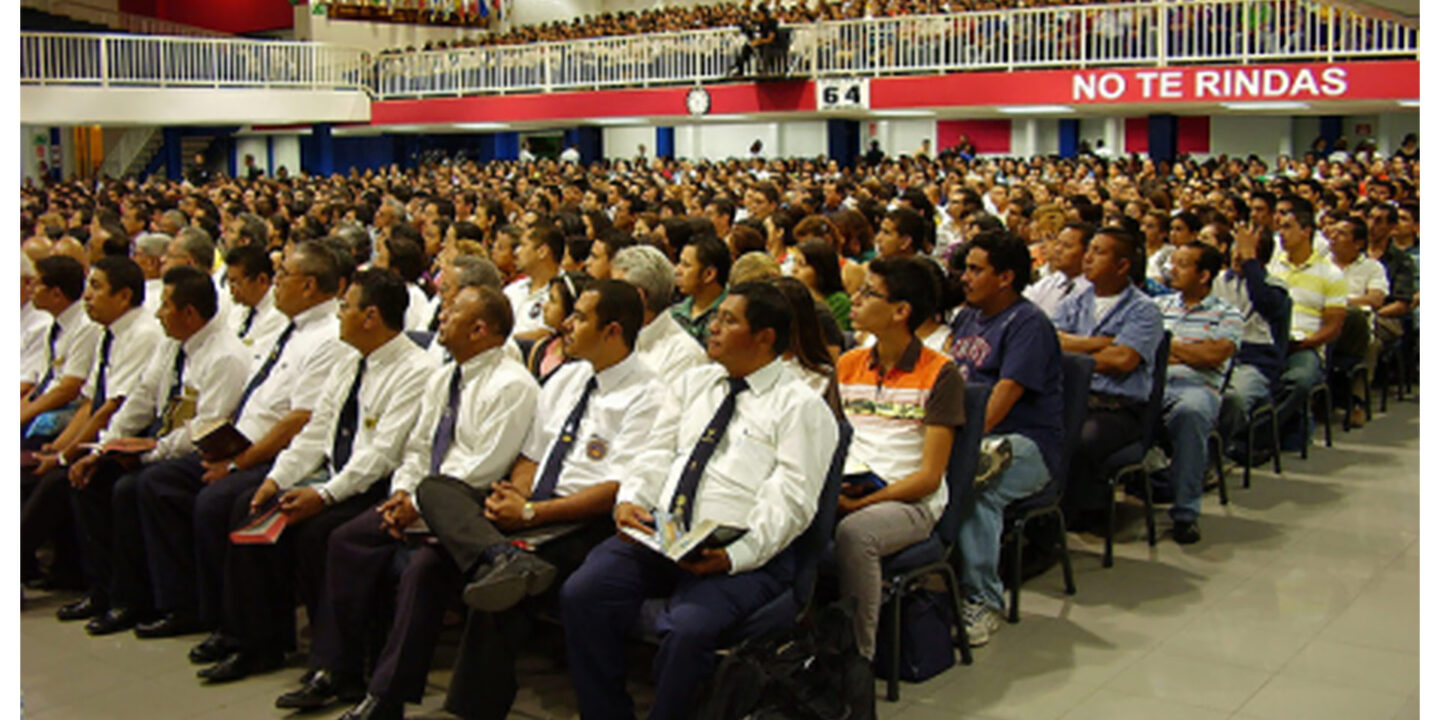

Christianity in El Salvador: The Republic of El Salvador is located in South America. Honduras borders the country on the Northeast, Guatemala on the Northwest and the Pacific Ocean on the South. Its capital and largest city is San Salvador, while the official language is Spanish. It has a human population of 6,029,976, and several ethnic groups. These include Mixed White and Indigenous or Mestizo, 86.3%; White, 12.7%; Indigenous, 0.2%; Black, 0.1%; others, 0.6%. Roman Catholicism is the dominant faith, embraced by 44.9% of the population. Protestants account for 37.1%; Atheists, 15.2%; other Christian denominations, 2.1% and other faiths, 0.7%.
Brief History
The country’s history includes pre-Hispanic and Mayan cultures, followed by Spanish conquest. Independence in 1821 led to the formation of the Federal Republic of Central America, after which El Salvador experienced cycles of political instability and the rise of export-led economies. The 20th century saw significant socio-economic inequality, leftist political agitation, and a brutal 12-year civil war from 1979 to 1992, which concluded with peace accords that included human rights reforms. The incumbent President is Nayib Bukele.
God’s Canvass
The geography of El Salvador is volcanic because it is located on the Pacific Ring of Fire, where the majority of the earth’s volcanoes and earthquakes occur. The country also has several lakes enclosed by volcanic craters. The highest point in El Salvador is Cerro El Pital, at 2,730 metres. Two parallel mountain ranges cross the country to the West with a central plateau between them.
These physical features divide the country into two physiographic regions. The mountain ranges and central plateau, covering 85% of the land, comprise the interior highlands. The remaining coastal plains are referred to as Pacific lowlands. The fauna and flora of the two regions are featured below.
Fauna
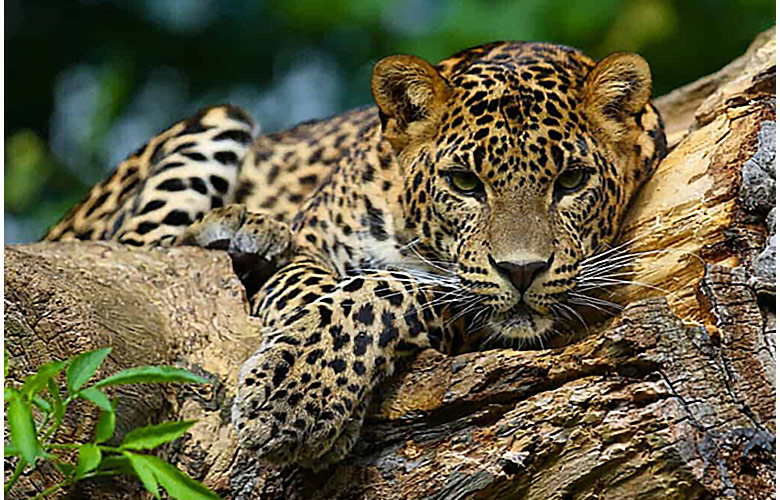
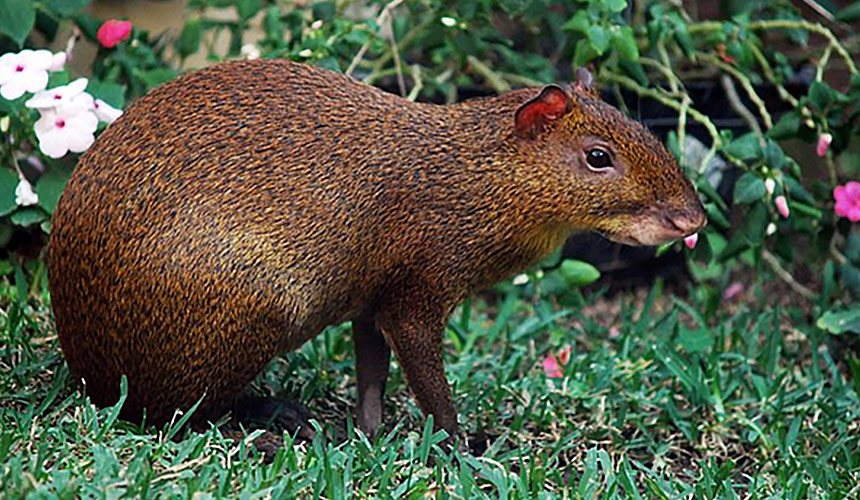
The most common types of animals in El Salvador are butterflies and birds, with hundreds of species of each. Common birds include toucans, motmots, and herons. Mammals like spider monkeys and ocelots can be found in the country’s national parks and reserves. The coastline supports several species of sea turtles, and marine life such as a variety of fish and the Salvador Worm Salamander. Some notable animals in the country are presented below.

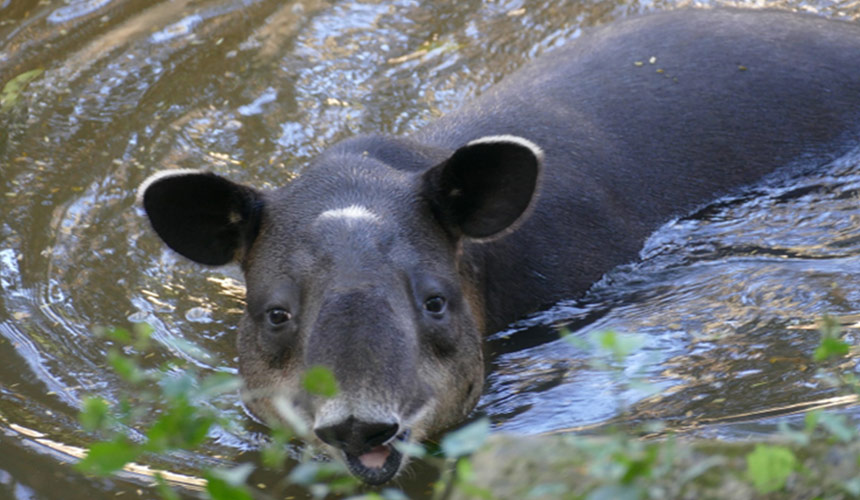
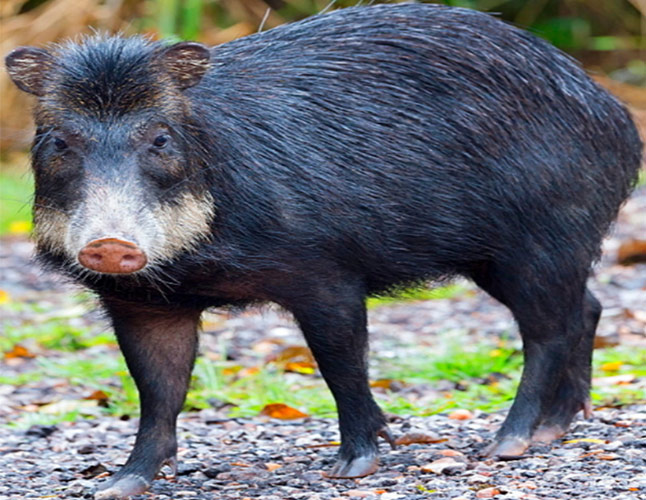
Flora
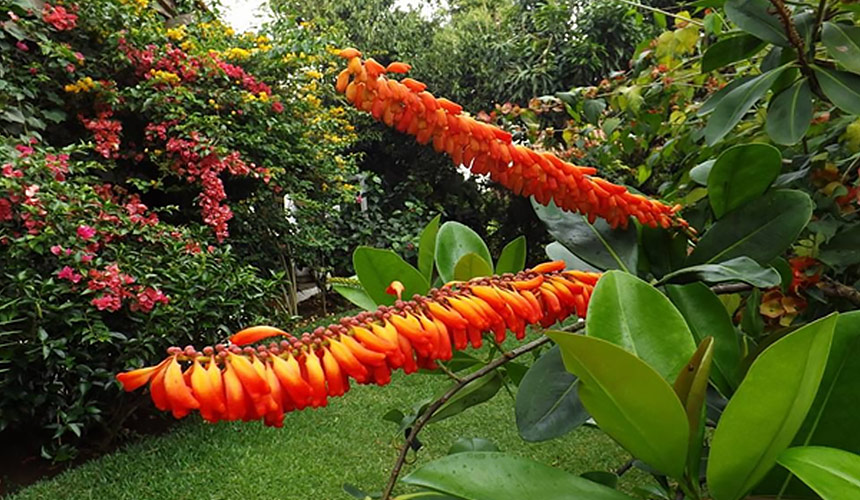
The country’s flora includes forests of deciduous trees like the national tree “maquilishuat,” and balsa, as well as grasslands and savannahs, which vary by elevation and platform. El Salvador also has mangrove forests along the coast and rich volcanic soils supporting ferns, mosses, and diverse vascular plants, especially the protected areas like El Impossible National Park. Other notable plants include the national flower, the “izote,” and various medicinal/food plants. Some of the plants are shown below.
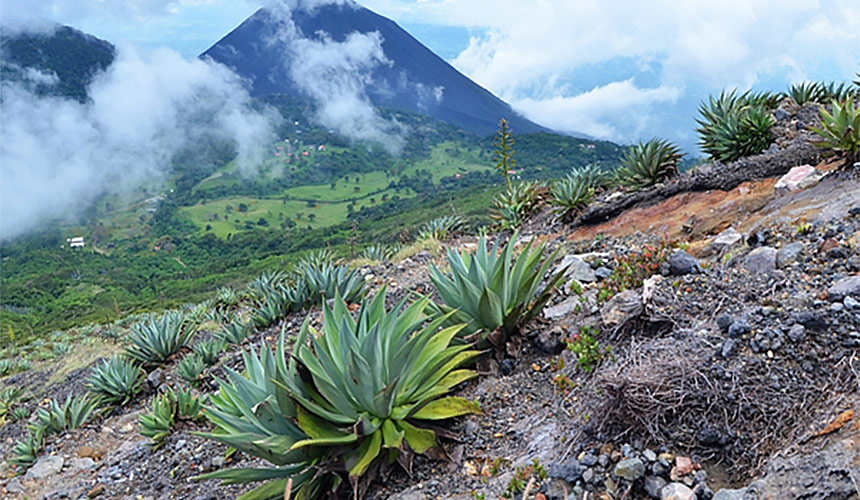

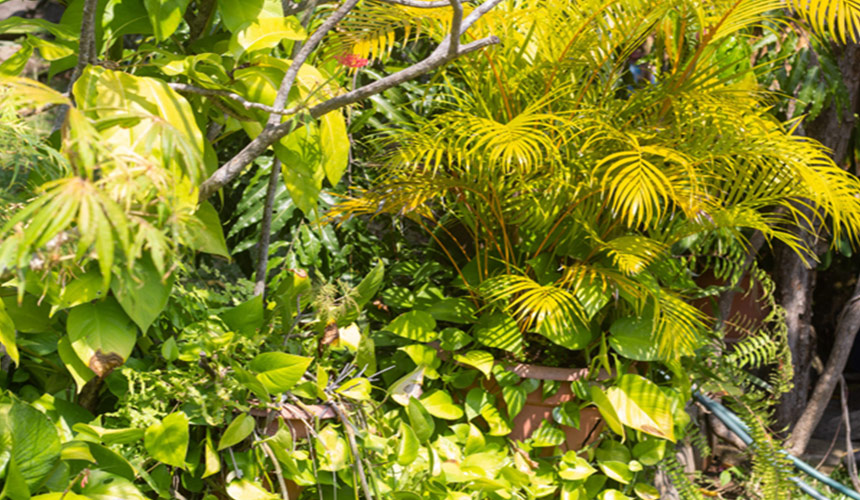

Beaches

Culture
El Salvador’s culture is a rich blend of indigenous Mesoamerican and Spanish influences. This is seen in its food, art, and traditions like the iconic “pupusa.” Family and community are central, with a warm, social atmosphere marked by gatherings, festivals, and a strong Catholic and Protestant presence. The culture also incorporates traditional crafts, music like “Mima” and “kumbia,” and a growing arts scene.
Traditional Attire
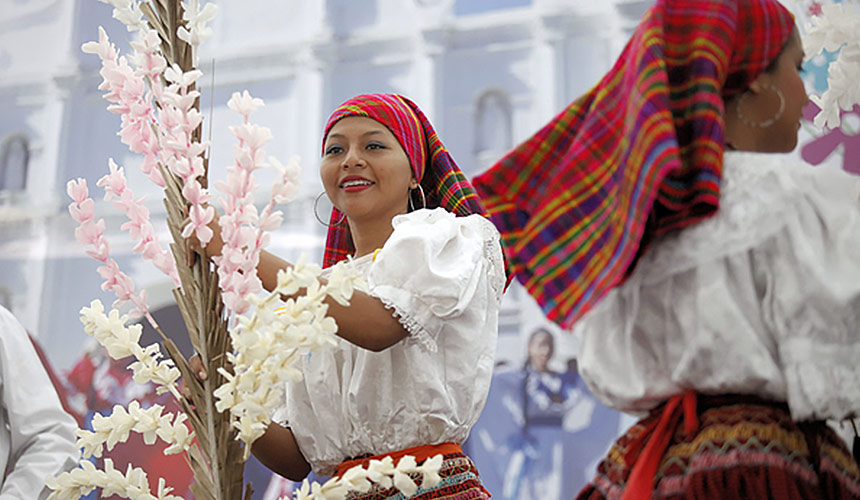
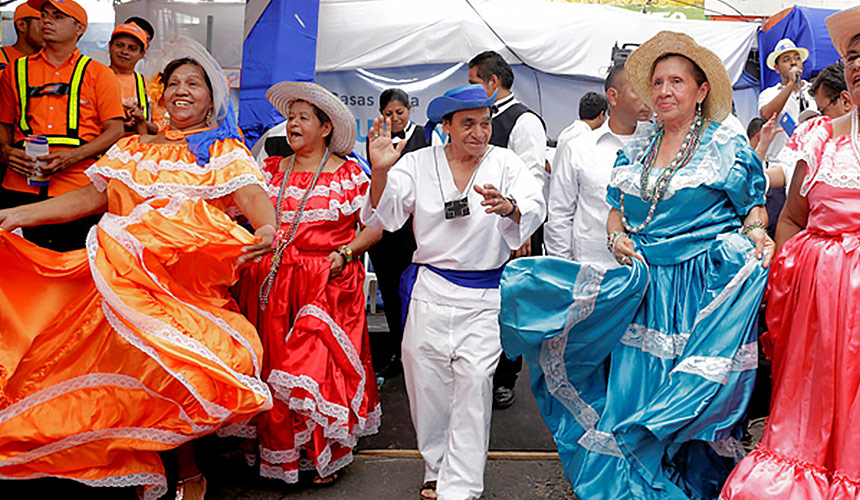
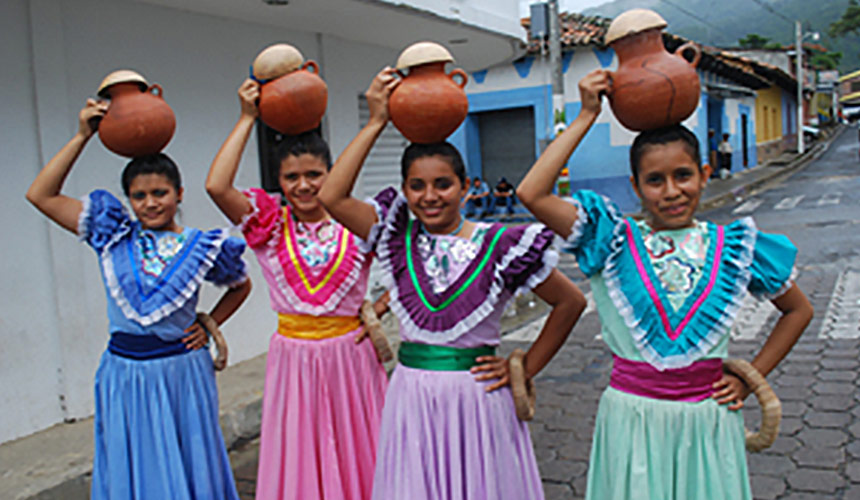
The country’s traditional clothing, the “traje,” consists of colourful, embroidered blouses and skirts for women and embroidered shirts with pants for men, often with shawls, headscarves, sandals or boots. While contemporary fashion is common, the festive and culturally significant garments are frequently worn during religious festivities, holidays, and in rural areas. Some of the traditional wears are shown below.


Cuisine
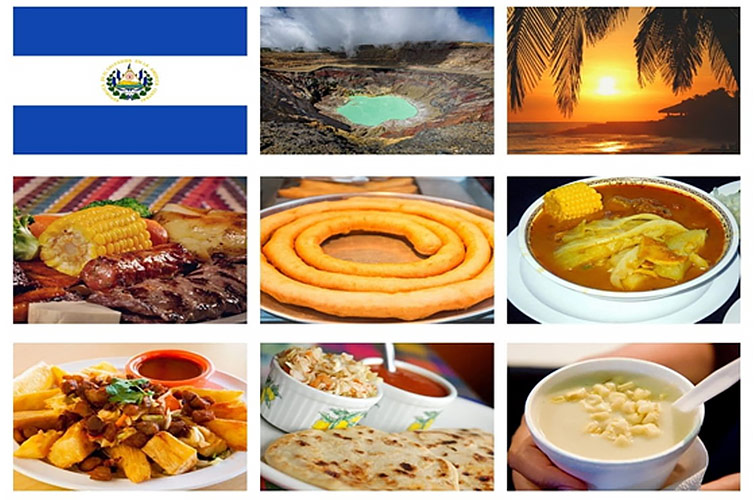
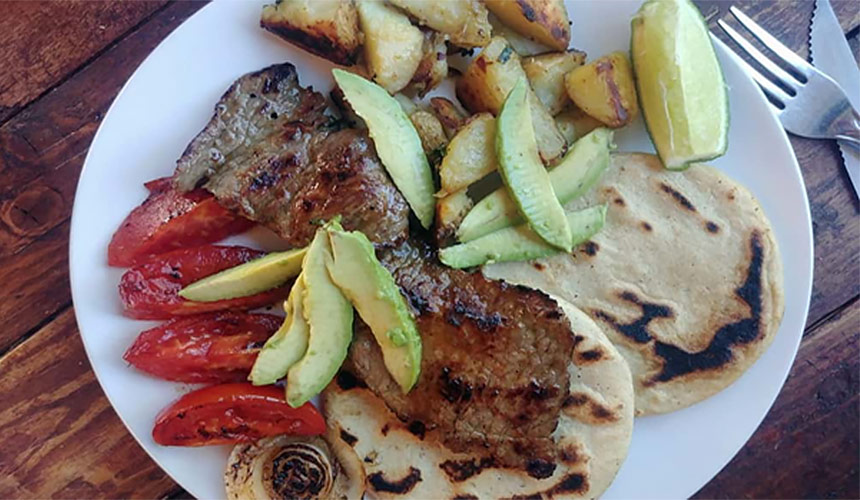
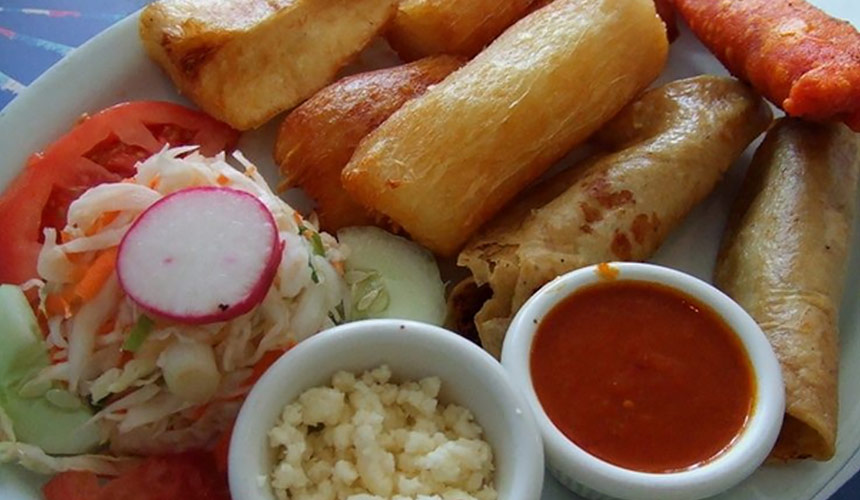
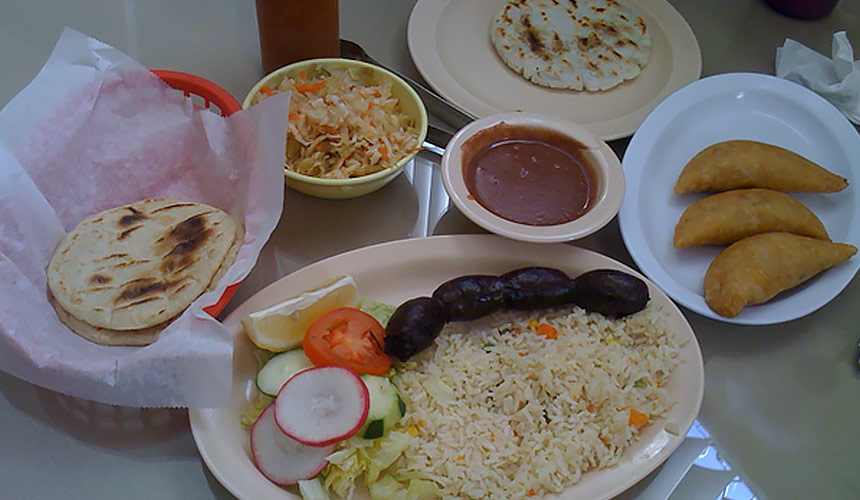
Salvadorian cuisine is a vibrant mix of Amerindian and Spanish influences, with maize, rice, beans, and meats forming the foundation of many dishes. The national dish is the “pupusa,” a thick corn tortilla filled with ingredients like cheese, beans, or pork and served with pickled cabbage (curtido) and tomato sauce. Some of the dishes are shown below.
Status of Christianity in El Salvador
Although El Salvador is a Christian country, Roman Catholicism, which has over-bearing influence on state affairs, does not promote piety among its followers. The church can only boast of a strong institution, as the level of devotion among its members is very poor.
The Joshua Project, a Christian organisation estimates that only 45.2% of the Christian population of 94.1% believes in the Great Commission of Jesus Christ. Invariably, the institutional churches are not doing much to promote the propagation of the true Gospel. Let us therefore, pray for a mighty revival of true faith in the country using the prayer points stated below or as the Holy Spirit leads us.
Prayer Points
- Thank God for His bountiful blessings on El Salvador and its people.
- Ask Him to judge the demonic principalities and powers operating in the country, and holding its people in captivity.
- Pray that the Father would destroy the influence of these evil spirits and expose their wickedness to their victims.
- Ask the Father to send labourers into His harvest in El Salvador.
- Pray that He would destroy the faulty foundation laid in the lives of believers through errors and demonic doctrines, and lay new one in Christ.
- Ask the Father to purge believers of pollutions imparted to them by the world and sanctify them by His word.
- Pray that God would empower believers to minister Christ with their lives.
- Ask Him to reveal Himself to those who doubt His existence and lead them to the foot of the cross by His Spirit.
- Use the President, Nayib Bukele as a point of contact for all unsaved people in his country.
Intercession Checklist
Use the political map of El Salvador provided in the text to pick a town, city or region for focused prayer. Present the chosen geographical space to the Father and tell Him that you are claiming its people for Christ as His ambassador (Corinthians 5:20). Remind the Father that He had instructed His Son to ask for the nations as His inheritance (Psalm 2:8).
****** Some materials sourced from El Salvador People Groups, Languages and Religion, https://joshuaproject.net; Artificial Intelligence Summary on Google.com; and El Salvador, https://en.wikipedia.org.