- Home
- People + Places
- Martyrdom of Archbishop Thomas ...

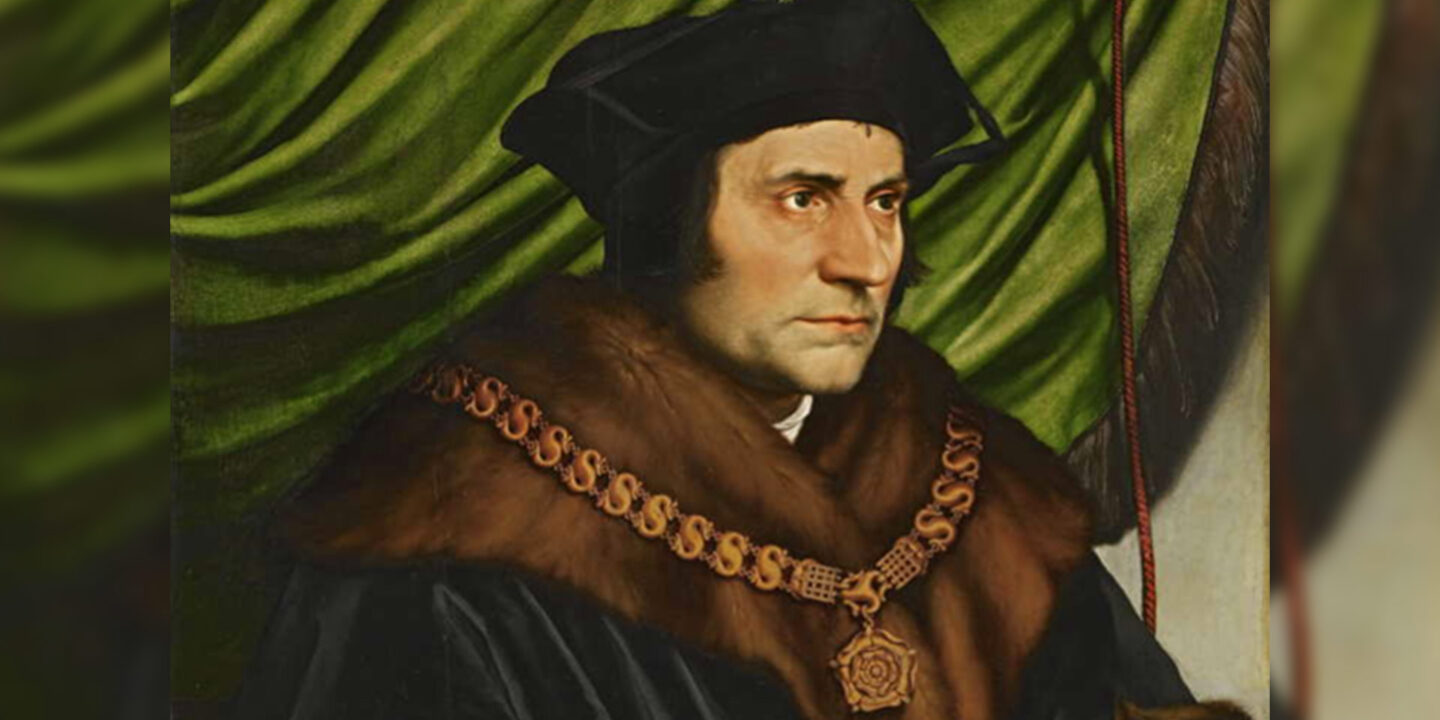
Martyrdom of Archbishop Thomas Cranmer (1556): Thomas Cranmer was born in Arselacton, Nottinghamshire, on July 2, 1489. He was one of the principal figures of the English Reformation. After his basic education, he studied at Cambridge University, where he was ordained a priest in 1523. Thereafter, he received a fellowship to Jesus College. When he got married, he lost the fellowship and left Jesus College to be a teacher at Buckingham College.
He lodged his wife at a nearby Inn called the Dolphin, whose landlady was a relative of hers. Because of this, he often visited the place, triggering a rumour by some Catholic merchants that he worked at the inn attending to horses. Not long after this, his wife died during childbirth, and he returned to Jesus College where he had again been granted fellowship.
In a few years, Cranmer was promoted to professor of Theology at the College, and was frequently appointed one of the school heads to examine candidates for Bachelors or Doctors of Divinity degrees. It was his practice to judge qualifications of candidate by their knowledge of Scriptures rather than the writings of ancient fathers of the church. Consequently, many Catholic priests and friars, who did not study the Bible, were rejected, while others improved themselves in the knowledge of Scriptures.
In 1529, Cranmer was first drawn into King Henry VIII’s marital controversies as well as his squabbles with the Catholic Church over the divorce of his first wife, Catherine of Aragon. She was the daughter of Ferdinand II and Isabella I of Spain. Catherine was previously the wife of Henry’s brother, Arthur, who died in 1502. The marriage lasted for 20 years, but by 1527, Henry was displeased with her because she had not borne him a son.
There was also the matter of his infatuation with his wife’s maid, Anne Boleyn. So, having a double reason for wanting to divorce his wife, he convinced himself that the reason she could not give him a male heir was that the marriage was not pleasing to God. According to him, Leviticus 20:21 states, “If a man shall take his brother’s wife, it is an unclean thing: he had uncovered his brother’s nakedness; they shall be childless. Note that this verse does not mean the widow of a deceased brother!
Based on his interpretation of the cited Scripture, the king ordered his chief Minister, Cardinal Wolsey to approach the papacy for a decree to annul his marriage to Catherine. When the king heard that a leading priest, Thomas Cranmer declared that the word of God should override Pope Clement VII’s decision on the matter, the king sent for him (Cranmer). As a result, the king appointed him Ambassador to Rome, to enable him argue his case before the Pope.
In 1530, Cranmer led a team to discuss the matter with the Pope. After they presented their case, the Pope promised to attend to them at his convenience. While others returned to England, Cranmer went to see Emperor Charles V, on King Henry’s behalf and convinced him that Scriptures must take precedent over whatever the Pope decrees. Cranmer also visited Germany in 1531 to win the support of the Protestant princes.
While there, despite his priestly orders, he married the niece of Andreas Osiander, a Lutheran theologian whom he had met at Nuremberg. He left his wife with Osiander when he returned to England, and then after a while sent for her privately. She remained with him until 1539 when king Henry instituted his Six Articles, which among other things prohibited ordained priests from getting married. He was compelled to return her to Germany to stay with his friends.
On March 30, 1553, shortly after Cranmer returned to England, the king appointed him the Archbishop of Canterbury. On May 23, Archbishop Cranmer declared that the marriage of Henry and Catherine of Aragon was invalid from the beginning, and within five days, he pronounced legal the king’s marriage to Anne Boleyn, which had been performed secretly the preceding January. In September, Anne gave birth to her daughter, Elizabeth, who was immediately declared heir to the throne, in place of Catherine of Aragon’s daughter, Mary, now regarded as illegitimate.
Like Catherine, Anne Boleyn failed to bear a son and the King soon lost interest in her. In 1536, after the stillbirth of a boy, he had her arrested and tried for adultery. When she was found guilty, Archbishop Cranmer invalidated their marriage. She was subsequently beheaded on May 19, 1536. Eleven days after her execution, the Archbishop officiated at the marriage of King Henry to Jane Seymour, who had been Anne Boleyn’s maid of honour when she married the king. Jane Seymour did bear the son Henry wanted – Edward, who would be king of England after Henry died. But Jane lived only twelve days after his birth and died on October 24, 1537.
Henry’s fourth wife was Anne of Cleves. They were married in 1540. She was a member of a Protestant ruling family from Germany. Thomas Cromwell, the king’s top minister, negotiated the marriage because he feared a Catholic alliance against England and wanted to gain diplomatic support from Lutherans on the continent. Cromwell had led Henry to believe that Catherine was very beautiful, but when he saw her he discovered that he had been tricked.
Additionally, the Protestant alliance was distasteful to him – he wanted to maintain the principle of the Catholic faith. So he insisted on a divorced immediately. Archbishop Cranmer promptly invalidated the marriage at the king’s request.
Thomas Howard, Duke of Norfolk, took advantage of Henry’s displeasure with Cromwell and convinced the king that he was a traitor to both his religion and England. Consequently, Cromwell was arrested on June 10 1540 for treason and heresy, condemned without a hearing, and beheaded in London on July 28 same year.
The king then married Catherine Howard, Thomas Howard’s niece. By 1542, however, he was tired of her and brought charges of unchastity against her – meaning that she was morally impure and immodest. Archbishop Cranmer played a leading role in the proceedings against her. She was found guilty and beheaded same year.
Henry’s last wife, who miraculously survived him, was Catherine Parr. Her most notable achievement was convincing him to show more kindness to his daughters, Mary and Elizabeth. After Henry’s death in 1547, she married Baron Seymour of Sudeley, brother of Edward Seymour, 1st Duke of Somerset. She died during childbirth in 1548.
When King Edward VI, a Protestant was crowned in 1546, he ordered Archbishop Cranmer to remove the Roman Catholic mass from all church services in England. With the king thus disposed to the Reformation, Cranmer worked with zeal and produced the first Book of Common Prayer in 1549 and its revision in 1552. His goal was to cripple the Catholic Church in England.
However, the Reformation was disrupted by the death of King Edward in July 1553. After the king passed on, Cranmer was exposed to all the wrath of his enemies, especially Mary who became queen. She was very bitter about the role he played in the father’s divorce of her mother, as well as his involvement in the Reformation which targeted her Catholic faith.
Archbishop Cranmer was among Reformation figures arrested by Queen Mary and tried for heresy. He was burnt at the stake in 1555 after he was tricked to recant his faith in Christ in writing with an offer of pardon by the Queen. The condemned man turned the tables on his enemies when he declared shortly before his execution “And inasmuch as my hand has offended and written contrary to my heart, my hand shall first be punished – for when I come to the fire it shall first be burnt. As for the pope, I refuse him, as Christ’s enemy, and antichrist, with all his false doctrine.”
It is clear from the narrative that Cranmer made many mistakes in his life and compromised his faith for political expediency. However, his commitment to the Reformation in England was not in doubt. Despite the fact that the fear of death compelled him to recant his faith in Christ in exchange for the Queen’s pardon, his disposition at his execution showed that he genuinely repented of his compromise. We try not to cast stones at others, but to pray that all that have been led astray by Catholic doctrines would find the truth and surrender their lives to Christ alone.
**** Culled from The New Foxes Book of Martyrs 2001, Bridge-Logos Publishers, Gainesville, Florida 32614 USA