- Home
- People + Places
- Martyrdoms in England Part 3

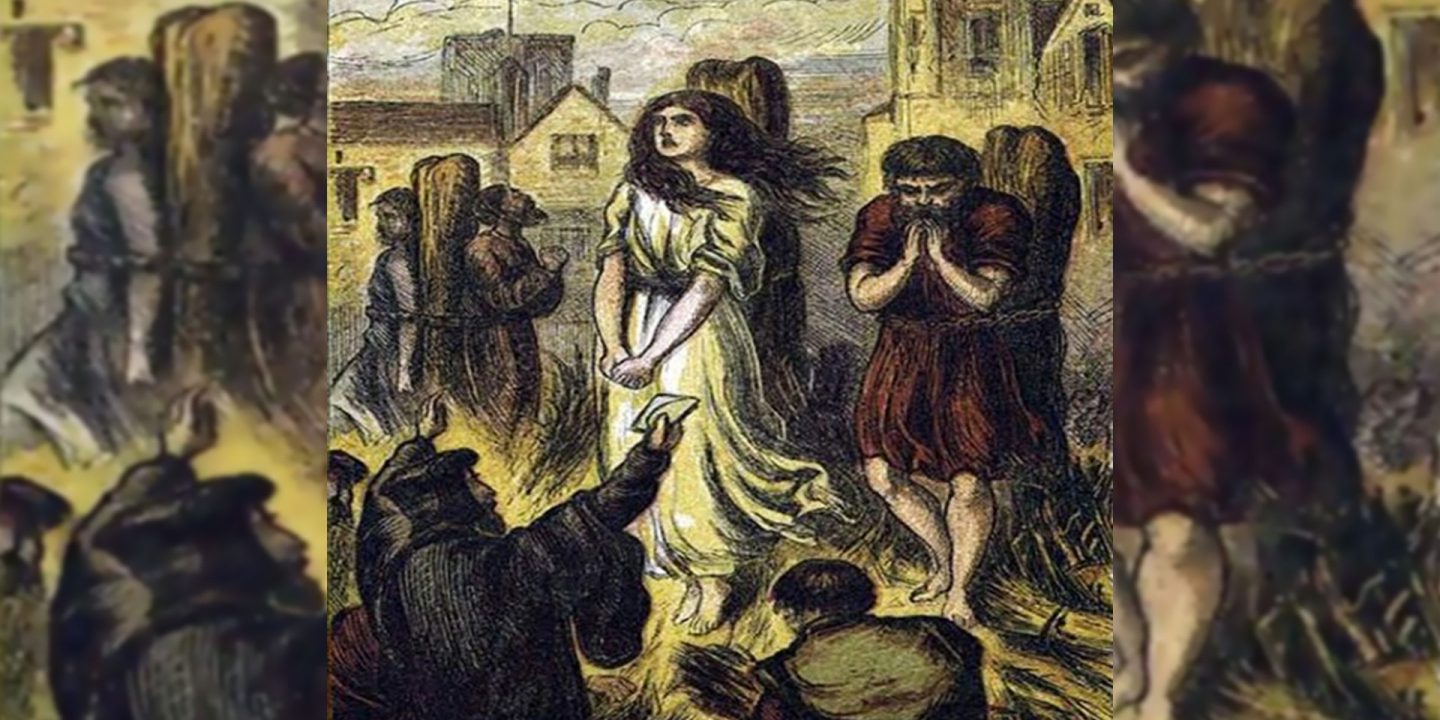
Martyrdoms in England Part 3: The writer of Hebrews made an interesting statement in chapter 12, verse 4, “Ye have not yet resisted unto blood, striving against sin.” He was talking to living saints, as well as to people like us who live in societies where it is not yet very risky to believe and preach the Gospel of Christ. Over the centuries, many men and women have paid the supreme price for their faith in God. Martyrdom has also become a key feature of Christianity in parts of the Middle East. In Syria for instance, the Al Qaeda controlled government is slaughtering Christians in many areas of the country. Sadly, the world is not outraged by these pogroms, a sign that it has been anesthetized against evil by wicked demons from the pit of hell.
Martyrdom is not something strange, as stories from Europe during the dark ages paint a grim picture of it. In England, many people were forced to accept the false doctrines of Roman Catholicism or face certain death. In this edition, we present stories of 16 Christians who watered their faith with their blood.
In August, 1473, the Police arrested Thomas Granter in London for allegedly declaring that he believed in the teachings of John Wycliffe, a church reformer. His accusers subsequently tried and condemned him as a “dangerous heretic.” On the day of his execution, Thomas was taken to the Sheriff’s house where he was given a meal. While eating, he said to the people there, “I am not eating a good meal, for I have a strange conflict to engage in before I eat again.”
When he finished eating, he gave thanks to God for the abundance of His gracious providence, and then asked that he be taken instantly to the place of execution so that he could bear testimony to the truth of those principles that he had declared. Accordingly, his executioners took him to a place known as Tower-hill and chained him to a stake. There he was burnt alive, still declaring the truth until his last breath.
In 1499 in Norwich, which is northeast of London, some Catholic priests accused a pious man named Badram of holding to the doctrines of Wycliffe. They later dragged him before the Bishop of Norwich. Badram confessed that he believed everything that Wycliffe said. Thereafter, his accusers condemned him as a dangerous heretic and burnt him at the stake.
The same fate befell another pious man, William Tilfrey in 1506. He was burnt alive at Amersham, in an enclosed area called Stoneyprat. His executioners forced his married daughter, Joan Clarke, to light the faggots around her father and watch him burn. Same year, the Bishop of Lincoln in eastern England condemned a priest named Father Roberts for being part of the Church Reformers’ group known as Lollard, and burned him alive at Buckingham.
In 1507, Thomas Norris, a simple man who was poor and harmless, was talking to his parish priest about some questions that he had concerning religion. During the conversation, the priest decided from the questions that Thomas asked that he was a Lollard. The priest then reported him to the church authorities who convicted him of heresy and burnt him alive.
In southern England, the church authorities arrested a man known as Lawrence Guale in 1507 for denying that the bread and wine in the Catholic Mass became the real body and blood of Jesus when the priest prays over them. His accusers kept him in jail for two years before he was burnt at the stake. Lawrence who had a shop in Salisbury, was also accused of entertaining some Lollards in his home.
Same year, in Chippen Sudburne, a pious woman was burnt at the stake by a chancellor named Dr Whittenham after he tried her for heresy. As her executioners and others left the place where she was burnt, a bull broke loose from a butcher and gored Dr Whittenham through the body. The bull carried his intestines around on its horns for some time, but did not harm any other person in the crowd.
On October 18, 1511, William Succling and John Bannister were burnt alive at Smithfield. They had formerly recanted their faith in Christ, but returned again to profession of true faith.
During the reign of Henry VII (1485-1509), one John Brown recanted his testimony of Christ for fear of torture and death. As penance, he carried a faggot around St. Paul’s Cathedral in London. However, in 1517, he returned to his confession of faith in Christ and was condemned by the Archbishop of Canterbury, Dr Wonhaman, and burnt alive. Before chaining him to the stake, Dr Wonhaman and Fisher, Bishop of Rochester tried to make him recant again by having his feet burnt in a fire until the flesh fell off and exposed the bones. But this time, John Brown held to the truth through the pain and died gloriously for Christ and the truth of God’s word.
On October 25, 1518, church officials arrested one John Stilincen and brought him before the Bishop of London, Richard Fitz-James. He had earlier recanted his faith in Christ for fear of torture and death. After the second trial, his accusers sentenced him to death for heresy and burnt him at the stake. Before he was executed before a large crowd at Smithfield, John declared that he believed in the teachings of Wycliffe, and though he had been weak enough before to recant his beliefs, he was now ready to die for God’s truth and His word.
In 1519, Robert Celin and Thomas Matthew were burnt alive in London for heresy. In particular, Robert had condemned image worship and pilgrimages. In 1532, one Thomas Harding and his wife were accused of heresy because they denied that the bread and wine turned into the actual body and blood of Christ when the priest prayed over them in the Catholic Mass. For this, the Bishop of Lincoln in eastern England condemned them to be burnt alive.
As the fire rose up, one of the papist spectators struck Thomas in the head with a thick piece of firewood so savagely that his head split open and his brains fell into the fire. The priests who attended the burning told the onlookers that whoever brought faggots to burn heretics would be given indulgences that would allow them to sin for forty days.
Toward the end of the year, the Archbishop of Canterbury, Worham, arrested Hitten, a priest at Maidstone in southeast England. Hitten was tortured in prison for several months and often examined by Worham and Fisher, the Bishop of Rochester. Fisher made every effort to compel the poor man to recant his faith in Christ. When the intimidation could not achieve their purpose, the accusers condemned Hitten to death as a heretic. They burnt him alive in front of his parish as a warning to his parishioners.
Documenting these stories for our readers was a Herculean task. It is not every day that we come face to face with evil in its starkest form. If anyone reads the Holy Bible and still follows the false doctrines of the Roman Catholic Church, that person would have himself to blame on judgment day. Revelation 17:6 tells us clearly the identity of the “whore” or spiritual Babylon that is the home of every foul spirit (Revelation 18:2); and would be judged by God.
This is what the Scripture says: “I saw that the woman was drunk with the blood of the saints (God’s people), and with the blood of the witnesses of Jesus (who were martyred).” If you are alive to read these stories, there is still an opportunity for you to escape from spiritual Babylon and be embraced by Almighty God through His Son Jesus Christ. Today, NOW is the time of salvation. You are not guaranteed tomorrow!