- Home
- People + Places
- Martyrdoms in Scotland

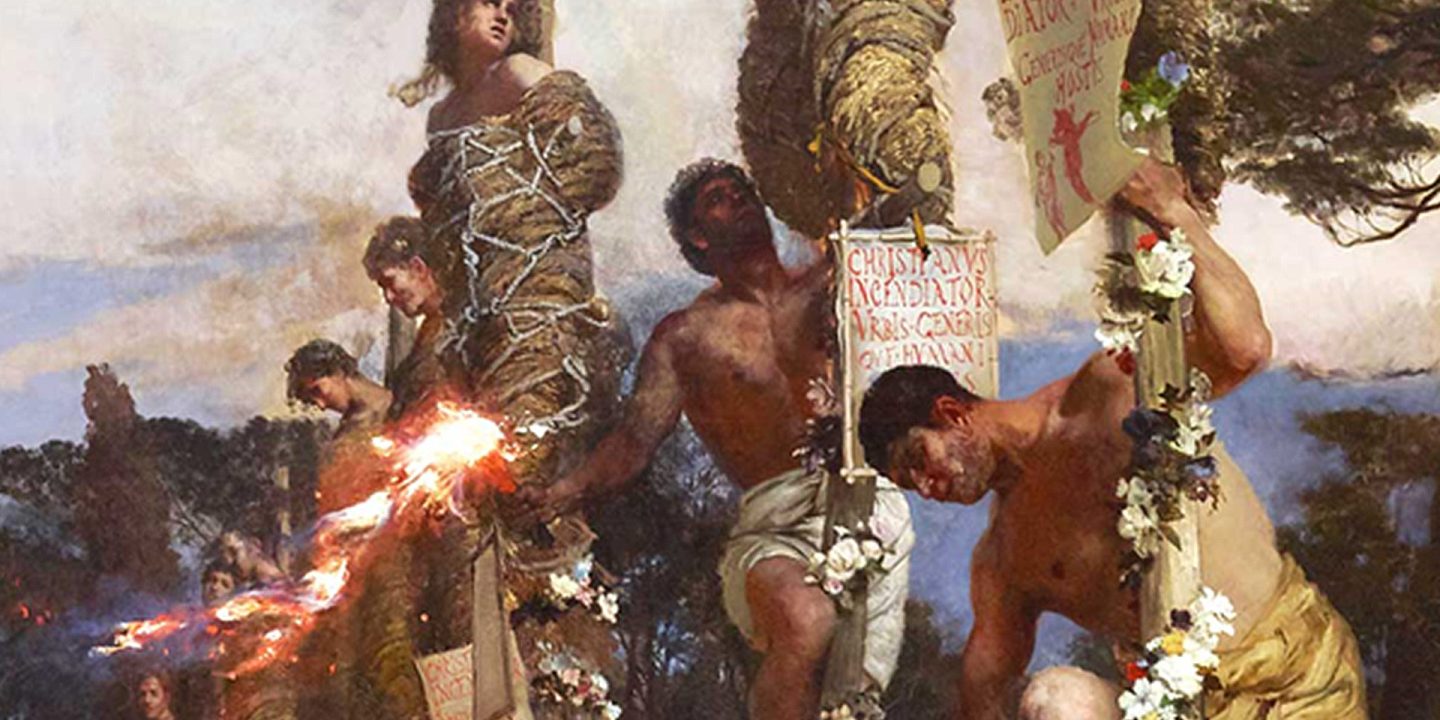
Martyrdoms in Scotland: Martin Luther’s teachings and controversy with the Roman Catholic Church had far-reaching results throughout Europe, Great Britain, and many other places. It stirred up the hearts of many and sent them searching for the truth of God’s word. Among the searchers was a Scotsman, Patrick Hamilton. To learn the truth of the Scriptures, he and three companions attended the University of Marburg in West-Central Germany, North of Frankfurt. It was Europe’s first Protestant university. Prince Philip, head of the Electoral House of Hesse, a central German state from 1940 to 1980, founded the institution.
Patrick and his companions became friends with Luther, and Philipp Melancthon, the German theologian who in 1521 wrote Loci Communes, the first extensive treatise on Protestant doctrine. The writings and teachings of Luther and Melancthon convinced Hamilton and his friends to leave the papal church and convert to Protestant beliefs.
Now inflamed with true knowledge of faith and godliness, Hamilton returned to Scotland and started preaching the Gospel of Christ. This attracted the attention of the Catholic leadership in the country, and he was subsequently arrested and charged for heresy in 1527. When the papal inquisitors passed judgment against him, Hamilton knelt down and prayed fervently before his accusers tied him to the stake and burnt him to death. His only crime? – preaching the true Gospel of Christ!
In 1529, a Benedictine monk, Henry Forest began to preach that Hamilton was a martyr and that what he taught was true. When the papal authority was informed of this, it arrested Forest and sentenced him to be burnt alive as a heretic. Because Forest was a popular and godly man, the papists decided against killing him openly for fear of triggering a revolt among the people. Consequently, they had him suffocated to death with a pillow held over his face!
In 1534, two Scots, David Stratton and Norman Gourlay were arrested for saying that the pope was anti-Christ and that purgatory, a key Catholic doctrine, was unscriptural. The papists sentenced them to death as heretics and burnt them at the stake. Another Scotsman, Dean Thomas Ferret, Vicar of Dolor and a canon of St. Colm’s Inche, preached every Sunday morning to his congregation from the New Testament.
This was seldom seen in Scotland because usually only a black or grey friar preached, and almost never from the Scriptures. Therefore, the friars became jealous and accused Ferret of being a heretic. The Bishop of Dunkeld then summoned Ferret to appear before him to defend himself.
During the interrogation, the Bishop charged the Vicar to “preach from good gospels and good epistles that expressed the liberty of the holy Mother Church.” In his response, Ferret asked the Bishop to show him the good gospels and good epistles to enable him know which one to preach from. At that, the Bishop angrily said, “I thank God that I never knew what the Old and New Testament were.
I will know nothing but my mass book and my pontifical. Go your way and let go of all these fantasies of yours, for if you continue in your erroneous opinions you will be sorry for it, and there will be no way to change the consequences.” Ferret answered, “I am confident my cause is just in the presence of God, and therefore I am not concerned about the consequences.”
Soon after, the Cardinal of St. Andrews and the Bishop issued summons to Ferret and several others to appear before them to answer to the charge of heresies. After the appeared before a Council constituted by the papists, these innocent folks were condemned as heretics and given no chance to defend themselves. Their captors then took them to Castle Hill at Edinburg and burnt them alive.
In 1543, George Wishart, the Scottish religious reformer who led John Knox to the Lord when the latter was a Roman Catholic priest, was teaching at Cambridge University. Because Wishart was quite serious in his teachings of the Scriptures, some people thought he was a severe person, while others disliked what he taught enough to wish him dead. In 1544, Wishart left Cambridge for Scotland to preach the Gospel of Christ.
Over the next two years, he travelled throughout the country, and nearly lost his life several times as the papal clergy tried to stop him. Soon, the Cardinal of Scotland, David Beaton plotted against this innocent man and had him arrested for heresy. He was tried and found guilty and sentenced to death. At the stake, Wishart fell to his knees and prayed, “O Thou Saviour of the world, have mercy on me. Father of heaven, I commend my spirit into Thy holy hands.”
Then he prayed for his accusers, “I beseech Thee, Father of heaven, forgive them that have lied against me. I forgive them with all my heart. I ask Christ to forgive them that out of ignorance have condemned me.” Then he turned to the people gathered there and said, “For the word’s sake and the true Gospel, which was given to me by the grace of God, I will suffer this day at the hands of men; not sorrowfully, but with a glad heart.
For this cause I was sent, that I should suffer this fire for Christ sake. Watch my face closely. You will not see me change colour, for I do not fear this grim fire. I know surely that my soul shall dine this night with my Saviour Christ.”
Upon hearing this, the hangman knelt before Wishart and said, “Sir, please forgive me, for I am not guilty of your death.” Wishart replied, “Come here to me.” When he did, Wishart kissed him on the cheek and said, “This is proof that I forgive you, my beloved. Do your work.” Wishart was then hung on the gallows over the fire until his body burned to ashes.
When the people saw his great torment, they could not keep from weeping for him, accusing the papists of murdering an innocent lamb. Soon after, an angry mob killed the Cardinal and occupied his castle. John Knox later joined the castle garrison and began preaching the Gospel.
The next year, in July 1547, the Roman Catholics regained the castle with French help, and made the defenders French galley slaves. In February 1549, Knox was released, and for a time he preached in England and Germany. Later he was pastor of an English congregation in Geneva, Switzerland, where he became a student of John Calvin, the French-born Swiss theologian. After he returned to Scotland, Knox established Presbyterianism in the country.
The last martyr in Scotland was 82-year old Walter Mill, killed in 1558. In his youth, Mill had been a papist and for some time parish priest in the Church of Lunan in Angus. At some point in his life, he went to Germany and there heard the true Gospel. When he returned to Scotland, he set aside Roman Catholicism and began to teach Reformation doctrine.
Though quite old, he got married. His activities soon attracted the attention of the papists, who plotted his arrest. Realising that he was about to be taken into custody, Mill left his church and hid in the country side for a while. Later, the Queen permitted him to return to his parish and preach. Not long after this, two papal priests arrested him and took him to St. Andrew castle in Edinburg.
At first Mill was threatened with torture and burning, but when this did not convince him to recant his Reformation beliefs, he was offered a monk’s position and lifetime security in the Abbey of Dunfermline. The catch was that he must recant the things he had taught, and agree that they were heresy. Mill called their bluff and continued to maintain the truth of the Gospel despite their threats.
Mill was then taken to St. Andrews church and put into the pulpit to be accused before the Bishops. Despite his great age and frailty caused by his suffering, he spoke with such boldness and courage that his adversaries were confused and ashamed. He then knelt in the pulpit and prayed so long that Andrew Oliphant, a papal priest said to him, “Sir Walter Mill, get up and respond to the charges; you are holding my lords here too long.” After he finished praying, Walter said, “You call me ‘Sir Walter’, call me Walter and not ‘Sir Walter.’ I have been one of the Pope’s knights far too long. Now say what you have to say.”
The examination then proceeded in the expected direction, and at the end, Oliphant asked Mill if he would recant his erroneous opinions. He answered, “I would rather forfeit ten thousand lives than give up a particle of the heavenly principles I received from the sufferings of my blessed Redeemer. Oliphant then pronounced the sentence upon him and he was conducted back to prison for execution the next day.
When he was taken to the place of his execution, Mill said to those who gathered there, “Dear friends, the reason why I am to suffer this day is not because I have committed any crimes, although I consider myself a most miserable sinner before God, but it is for the defense of the faith of Jesus Christ as set forth in the Old and New Testament for us.
It is that faith for which godly martyrs have offered themselves gladly before, being assured of eternal happiness. So this day I praise God that He has called me to be among those servants, and seal up His truth with my life, which I received from Him and willingly offer it back to Him for His glory.
Therefore, if you wish to escape the second death, do not be seduced by the lies of the priests, monks, friars, priors, abbots, bishops, and the rest of the sect of Antichrist. Depend on Jesus Christ and His mercy, so that you will be delivered from condemnation and receive eternal life.” While he spoke there was great wailing and mourning among the people, for they were stirred by his courage and boldness. Walter Mill was then lifted up on the stake, and the faggots lit. As the flame burned him, he cried out, “Lord, have mercy on me! Pray, people pray, while there is yet time.” Then he left this world to be with his Lord for whom he died.
Each time I compile stories of the brutalities of the Roman Catholic Church against Christians, the Scripture that comes to mind is Revelation 17:6, “I could see that the woman was drunk with the blood of the martyrs of Jesus.” I am baffled that sane people are still supporting this blood soaked organisation, whose reign of terror has claimed more lives than most conventional wars globally. We pray that the eyes of the blind would be open to see the spirit at work in this so-called “Mother Church” to enable them flee for their lives.
*****Culled from The New Foxe’s Book of Martyrs, Bridge-Logos Publishers, Gainesville, Florida 32614 USA